Trams in Athens
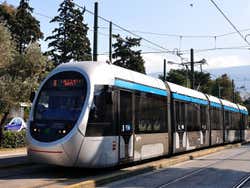
Eco-friendly, modern, and offering stunning views of the Saronic Gulf, Athens' trams are the perfect choice for those seeking a relaxed journey. While slower than the metro, they are unbeatable if you want to enjoy the coastal scenery of the "Athenian Riviera."
Although most travelers won’t even notice that Athens has a tram network, it's one of the most enjoyable ways to reach the city's coastal neighborhoods. Especially if you take the lines that run along the coast, with a view of the Saronic Gulf.
History
The first tram lines in Athens were constructed in 1882. The first vehicles had up to sixteen seats and were pulled by three horses.
In 1887, Athens replaced the horsecars with steam motor trams.
A few decades later, in October 1908, the city renewed the streetcars with electric trams.
Although the tram was the most popular means of transport during World War II, used by the Greek troops, its use plummeted in the following years. The tram lines were closed permanently in 1960.
It wasn't until the 2004 Athens Olympics that the tram became part of Athenian life again.
Lines
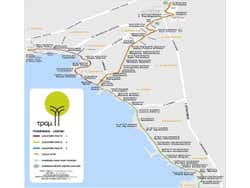
Athens' tram network has been simplified into two main routes connecting the city center to the sea:
- Line T6 (Syntagma - Pikrodafni): Connects the heart of the city (Syntagma Square) to the coast, where you can transfer to trams for the beaches.
- Line T7 (Piraeus - Voula): Runs along the entire coastline. It's the perfect route for getting from the port of Piraeus to the beaches and clubs of Glyfada and Voula.
The meeting point for both lines is the Pikrodafni stop. If you're coming from Syntagma and want to go to the beaches of Voula, this is where you'll need to change trams.
Schedule & Frequency
Generally, trams run between 5:30 am and 1 am. On weekends, the last trams depart from Syntagma Square at 2:15 am.
Fares
Check out our section on tickets and fares for up-to-date information on the various tickets available and prices.